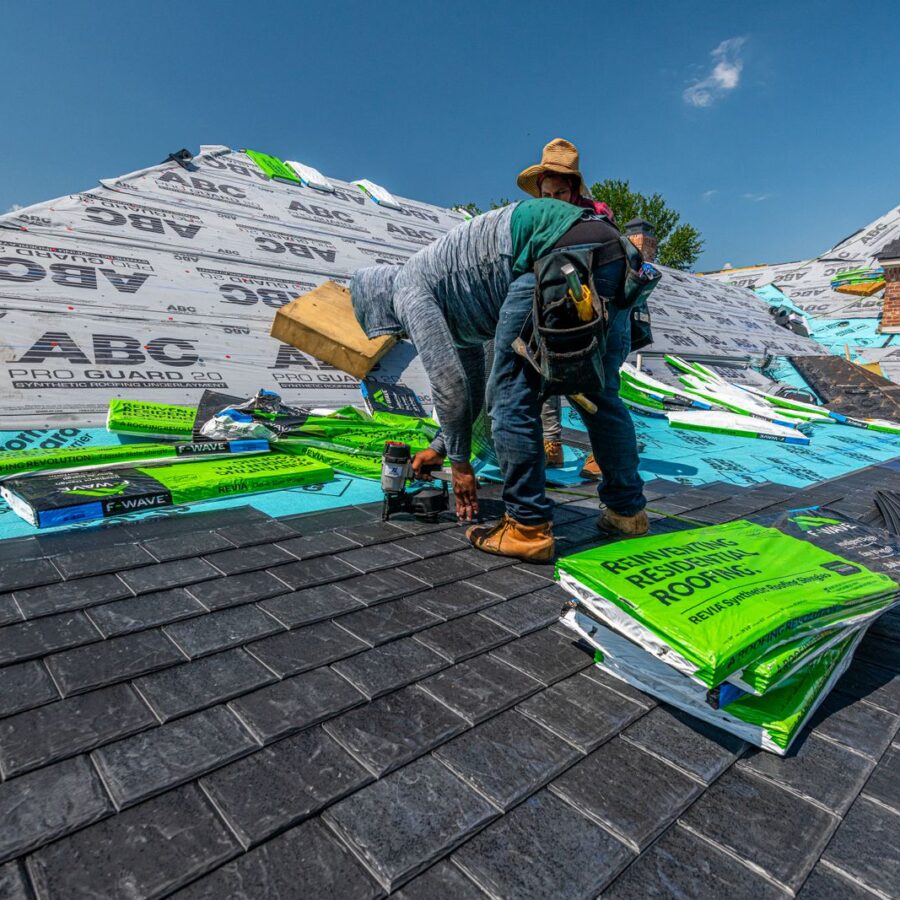
Quick answer: In 2026, most U.S. homeowners spend between roughly $9,000 and $18,000 to replace a standard architectural asphalt shingle roof, with the national average landing around $11,000 to $16,000 for a typical 2,000-square-foot home. Metal roofs on the same home run $21,000 to $42,000, and premium materials like slate or copper can push past $55,000. Your final number depends on five things: roof size, material, pitch and complexity, tear-off scope, and where you live.
Want real numbers for your roof instead of a national average? RidgeRoofer connects you with a local roofer — it takes about 60 seconds, there’s no obligation, and you choose whether to hire.
The rest of this guide explains where those numbers come from, why quotes vary so much house to house, and how to spot an estimate that will hold up once the crew starts pulling shingles off.
What the “average” roof replacement actually costs in 2026
If you search “average roof replacement cost” you will get numbers ranging from about $8,500 to over $30,000 depending on the source — and every one of those numbers is technically right for the roof it describes. That spread is not sloppy data. It reflects the fact that “a roof” can mean a 1,200-square-foot ranch with a walkable pitch and one existing layer, or a 3,500-square-foot two-story with dormers, valleys, and a 10/12 pitch.
To make sense of the range, it helps to look at three tiers of averages:
- National midpoint for a standard 2,000 sq ft roof, architectural shingles: around $10,000 to $16,000 installed, all-in.
- Broader typical spend across all home sizes and materials: $9,000 to $18,000, per current 2026 industry surveys.
- Larger, more complex, or premium-material homes: $20,000 to $50,000+, especially anywhere metal, tile, or slate is involved.
HomeAdvisor’s most recent tracking data puts the national average at roughly $9,528, with most projects between $5,869 and $13,220 — but that dataset skews toward smaller and mid-sized homes. Fixr’s 2026 update pegs the average at about $10,000, with most projects between $7,500 and $14,000. Meanwhile, Bill Ragan Roofing (which pulls its numbers from the industry’s Cost vs. Value Report) reports that the average architectural asphalt shingle roof came in at $31,871 in 2026 — because the Cost vs. Value model assumes a 30-square (3,000 sq ft) roof, tear-off included, priced through mid-market contractors.
All of those numbers are useful. What matters is matching the right average to your house.
Cost per square foot, by material
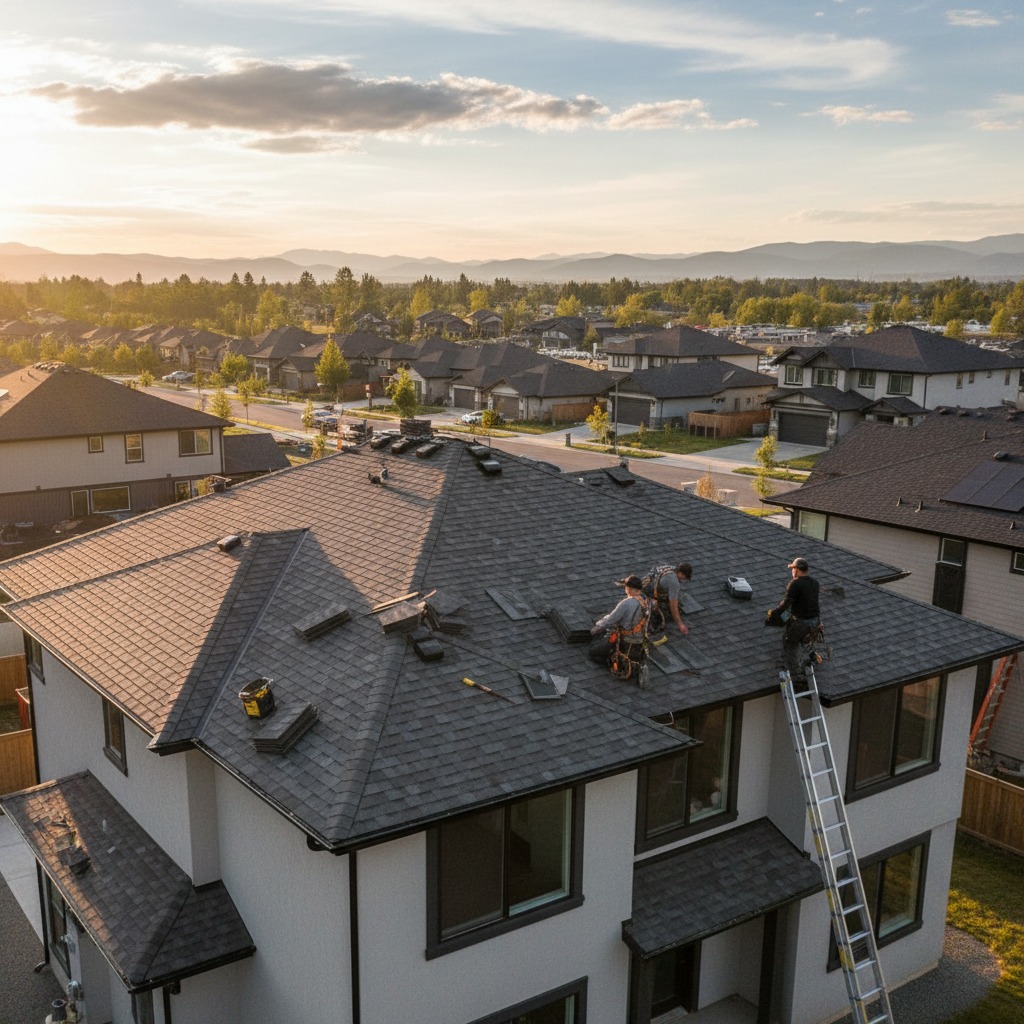
The single biggest lever on your roof price is the material you choose. Here is the current 2026 installed cost range for the eight materials most commonly bid on U.S. homes.
| Roofing material | Installed cost / sq ft (2026) | Typical 2,000 sq ft home | Expected lifespan |
|---|---|---|---|
| 3-tab asphalt shingles | $3.75 – $5.50 | $7,500 – $11,000 | 15 – 20 years |
| Architectural asphalt shingles | $4.50 – $8.00 | $9,000 – $16,000 | 25 – 30 years |
| Luxury / designer shingles | $7.00 – $12.00 | $14,000 – $24,000 | 30 – 50 years |
| Steel (exposed fastener) | $4.50 – $6.50 | $9,000 – $13,000 | 25 – 40 years |
| Standing seam metal (steel or aluminum) | $9.00 – $16.00 | $18,000 – $32,000 | 40 – 70 years |
| Composite (synthetic slate/shake) | $7.00 – $14.00 | $14,000 – $28,000 | 40 – 50 years |
| Clay or concrete tile | $8.00 – $25.00 | $16,000 – $50,000 | 50 – 100 years |
| Natural slate | $10.00 – $30.00 | $20,000 – $60,000 | 75 – 150 years |
| Copper | $13.00 – $30.00 | $26,000 – $60,000 | 60 – 100+ years |
Sources: HomeGuide 2026 comparison data, Interlock 2026 metal roofing cost report, Bill Ragan Roofing 2026 update.
Architectural (also called dimensional or laminate) asphalt shingles remain the default choice for most U.S. homes because they hit a sweet spot on price, warranty length, and curb appeal. They now account for the overwhelming majority of shingle sales, edging out old 3-tab as manufacturers phase down 3-tab production. If a contractor bids 3-tab in 2026, ask why — the price difference is small but the lifespan gap is real.
The five variables that actually move your quote
When roof quotes for similar homes differ by $6,000 or more, it’s almost never because one contractor is dishonest. It’s because they’ve made different assumptions about these five variables. Understanding each one lets you compare apples to apples.
1. Roof size (not house size)
Your roof is bigger than the ground your house sits on. A rule of thumb: roof surface area equals your home’s footprint multiplied by a pitch factor of roughly 1.05 to 1.40. A 2,000 sq ft footprint with a 6/12 pitch works out to about 2,320 sq ft of actual roof. Steeper pitches push that multiplier higher. Contractors price per roofing square — one square equals 100 sq ft — so always confirm whether a quote is per square foot or per square, because a factor of 100 is easy to miss.
2. Material
Covered above. Two things worth adding: first, within a category, brand and warranty tier matter — a GAF Timberline HDZ shingle costs meaningfully more than a builder-grade line even though both are “architectural.” Second, some materials come with structural strings attached. Slate and tile can weigh 2–4x what asphalt weighs per square foot, and older homes sometimes need framing reinforcement before they can carry it — a $3,000 to $8,000 line item that has to be planned into the budget, not discovered mid-project.
3. Pitch and complexity
The steeper the roof, the slower and more dangerous the work. Contractors typically charge a 15% to 30% premium on labor for slopes above 6/12, and above 9/12 they’ll often need harnesses, roof jacks, or scaffolding that add real cost.
Complexity — the number of hips, valleys, dormers, chimneys, skylights, and pipe penetrations — matters just as much. Each valley requires custom cutting and metal flashing. Each dormer means more transitions and more places water could get in. A rule of thumb: high-complexity roofs add 20% to 30% to both material (because of waste from cuts) and labor time compared to a simple gable of the same square footage.
4. Tear-off and what’s under the shingles
Removing your old roof adds roughly $1 to $2 per square foot, or $2,000 to $5,000 on a typical home. Two layers of existing shingles means twice the tear-off labor and disposal weight. Some jurisdictions cap the number of layers at two before requiring a full strip, which can bump a “reroof” quote into a “tear-off” quote you weren’t expecting.
The larger unknown is what’s under the shingles. If the plywood or OSB decking is rotted, warped, or delaminated — usually from years of small leaks or inadequate attic ventilation — it has to be replaced before new shingles go on. Expect $70 to $120 per sheet installed, and it’s not unusual for even a healthy-looking roof to need 4 to 10 sheets replaced once it’s opened up. A good estimate will include a decking allowance (for example, “up to 5 sheets included; additional at $95 each”) so you’re not blindsided.
5. Where you live
Regional labor rates are the biggest reason two identical houses in different states get very different quotes. RoofVista’s 2026 state pricing data illustrates this clearly: a 2,000 sq ft architectural shingle roof in San Antonio, Texas runs about $8,500 to $11,000, while the exact same scope in San Francisco runs $16,000 to $22,000. A bundle of GAF Timberline HDZ costs roughly the same at any supply house in America — the difference is what the crew installing it is paid, plus the cost of doing business (insurance, workers’ comp, permits) in that market.
Climate adds a secondary regional layer. Snow-belt homes need ice-and-water shield extended up from the eaves. Hurricane-zone homes need enhanced fastening schedules and often specific wind-rated products. Both add cost, but both also matter — cutting them is where cheap roofs fail early.
Where the money actually goes
On a typical 2,000 sq ft asphalt shingle replacement in 2026, the cost breakdown looks roughly like this:
| Line item | Share of total | What it covers |
|---|---|---|
| Labor | 40% – 60% | Crew wages, workers’ comp insurance, project management, and job-site supervision |
| Primary materials | 35% – 45% | Shingles, underlayment, ice-and-water shield, drip edge, ridge cap, ventilation, fasteners, flashing |
| Tear-off & disposal | 5% – 10% | Removing old material, dumpster rental, landfill fees |
| Overhead & profit | 10% – 20% | Office costs, liability insurance, warranty reserves, sales, and contractor margin |
| Permits & inspections | 1% – 3% | Local building permits and post-install inspection fees |
The biggest surprise for most homeowners is how much of the price is labor. Roofing labor now runs roughly $150 to $300 per square (100 sq ft) depending on region and complexity, and it has been climbing faster than material costs for several years thanks to a persistent shortage of experienced installers. When you see an unusually low quote, labor is usually where the corner is being cut — either by using undertrained crews or by rushing installs that should take two days into one.
Why 2026 quotes look higher than 2024
If you got a quote in 2023 or 2024 and are getting new ones now, you’ll notice the numbers have moved. Three forces are behind it:
1. Manufacturer price increases. The three largest asphalt shingle makers — GAF, Owens Corning, and CertainTeed — pushed through 6% to 10% increases in early 2025, another 4% to 8% in April 2026, and a further round of 6% to 10% effective mid-2026, per distributor letters circulated in May 2026. These stack on top of each other. A shingle that cost $32 per bundle in early 2024 is closer to $40 today.
2. Section 232 steel and aluminum tariffs. The federal tariff on imported steel and aluminum doubled to 50% in mid-2025 and has hit roofing hard. Metal roofing panels are almost entirely steel or aluminum, so the tariff flows through to price almost dollar for dollar — roughly a 60% increase in metal roofing material cost since the tariff took full effect. And every asphalt shingle installation also uses metal: drip edge, step flashing, valley metal, roof vents, and fasteners. Those accessory items have climbed 15% to 25%, adding several hundred dollars even to shingle jobs.
3. Broader construction inflation. The National Association of Home Builders reports that overall building material costs are now 34% higher than December 2020. Construction input prices were up 4.8% year-over-year in Q1 2026 alone. Petroleum-based inputs (a large share of asphalt shingle content) and specialty chemicals used in shingle manufacturing have all seen new tariffs or duty increases.
The practical takeaway: quotes valid for 30 days probably mean it. If you’re collecting bids, don’t sit on them for months waiting to decide. And if a contractor’s quote is significantly lower than the others, ask whether their material pricing is locked or subject to a supplier increase before install.
Does a new roof actually add resale value?
Two industry datasets track this, and they say slightly different things.
The annual Cost vs. Value Report — published by Zonda, the company behind Remodeling magazine — puts asphalt shingle roof replacement at a ~61% cost recoup at resale nationally in 2026, meaning a $20,000 project adds about $12,200 to your sale price. Metal roofing recoups roughly 50% to 55%. The 2025 NAR Remodeling Impact Report, which surveys Realtors rather than contractors, puts the recoup lower at about 37% — but the same report gave new roofing a Joy Score of 10 out of 10, tying the top score across all projects, and 43% of Realtors reported increased buyer demand tied to a new roof.
On paper that looks like a loss. In practice, three things the ROI number ignores usually flip the math:
- Avoided interior damage. A single failure event on an aging roof — one bad storm, one ice dam — can cost $5,000 to $15,000 in drywall, insulation, and sometimes mold remediation. Replacing before failure captures that value.
- Insurance discounts and insurability itself. Class 4 impact-rated shingles earn premium discounts of 10% to 35% in many states. Just as importantly, many carriers are now refusing to renew policies on roofs older than 15 to 20 years, or dropping to actual-cash-value coverage — which pays the depreciated value of a 15-year-old roof, not what it costs to replace.
- Speed of sale. Documented new roofs shorten list-to-sale times in most markets, and remove one of the most common inspection-report objections during closing.
Add those together and roof replacement is almost always net-positive within 5 to 10 years, even before resale.
How to read a real roofing estimate
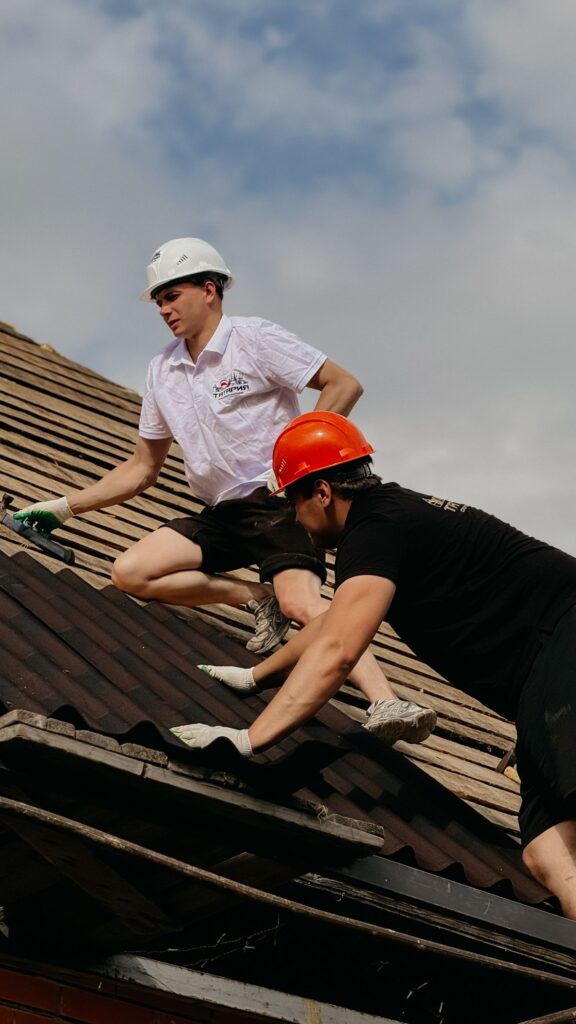
A professional estimate should be itemized enough that you understand what you’re paying for. Look for these eight line items — and be cautious of any bid that lumps them into a single number.
- Shingles or primary roofing material — brand, product line, color, and warranty tier
- Underlayment — synthetic vs. felt, plus ice-and-water shield coverage (eaves, valleys, penetrations, and up-slope from eaves in cold climates)
- Flashing — step, counter, valley, chimney, and skylight, specified as new (not reused)
- Ventilation — ridge vent, off-ridge, or box vents, and intake ventilation at the soffits (the roof works as a system, and cutting intake ventilation shortens shingle life)
- Tear-off and disposal — how many layers, dumpster included, magnetic nail sweep of the yard
- Decking allowance — a specific per-sheet price for replacement plywood or OSB, with a stated included quantity
- Permit and inspection — pulled by the contractor in their name (not yours), with the fee separate or clearly rolled in
- Warranty — the manufacturer’s product warranty and the contractor’s workmanship warranty, in years, in writing
An estimate missing any of these isn’t necessarily dishonest — but each omission is a place where a “surprise” change order can appear later. Ask before you sign, not after.
Red flags in a low bid
If one of your quotes is meaningfully cheaper than the others, work through this checklist before you assume you’ve found the deal of the year:
- No decking allowance. The bid assumes zero rotted sheets. On a roof old enough to need replacement, that’s rarely true, and every additional sheet becomes an unbudgeted change order.
- Reused flashing. Reusing chimney or valley flashing saves the contractor material and labor but is one of the top causes of premature leaks. New flashing should be spelled out.
- Felt underlayment where synthetic is standard. Synthetic underlayment costs a bit more but performs dramatically better. In 2026, felt-only underlayment is a cost-cutting tell.
- No mention of ventilation. An installer who doesn’t touch ventilation is treating the roof as a surface, not a system.
- Cash-only, no permit, no written contract. Beyond the obvious risk, this usually voids your homeowner’s insurance if anything goes wrong during the install.
- No proof of insurance. Ask for both liability and workers’ comp certificates. If a worker is injured on your uninsured contractor’s job site, the liability can attach to your homeowner’s policy.
- High-pressure “today only” pricing. Legitimate contractors have booked schedules. Discounts tied to signing on the spot are a sales tactic, not a savings.
Financing, insurance, and timing
Most roofing contractors now offer financing through third-party lenders (Enhancify, GreenSky, and Service Finance are common), with rates in 2026 generally running 7% to 15% depending on credit and term. On a $15,000 roof at 10% APR over 5 years, that’s roughly $319/month. Compare that against a HELOC — often 8% to 10% and interest-deductible if you itemize — before you take the contractor’s financing at face value.
If your roof was damaged by wind, hail, or a fallen tree, your homeowner’s insurance may cover most of the replacement. Two things to know:
- ACV vs. RCV coverage. Actual Cash Value pays the depreciated value of your existing roof (a 15-year-old roof might be worth 50% or less of a new one). Replacement Cost Value pays what it costs to install a new one, less your deductible. Check your declarations page. Many carriers have quietly moved older roofs to ACV over the last few years.
- The claim is not a free-for-all. Insurance covers damage, not upgrades. If you want to go from architectural asphalt to standing seam metal, the insurer pays the shingle equivalent and you pay the difference.
On timing: roofing crews are busiest from late spring through early fall. If your roof isn’t actively leaking, scheduling in late winter or early spring often gets you slightly better pricing and much better crew availability. Emergency reroofs in the middle of hurricane season are the most expensive way to buy a roof.
The bottom line
For the typical U.S. home in 2026, budgeting $12,000 to $18,000 for a quality architectural asphalt roof, or $25,000 to $40,000 for standing seam metal, will get you within range of what a good local contractor will bid — with the actual number moving up or down based on your roof’s specific size, pitch, complexity, and your local market. Anything materially below that range deserves a careful line-by-line read of the estimate before you sign.
The right roof is not the cheapest one — it’s the one whose scope, materials, and warranty terms you fully understand before the crew shows up. Insist on an itemized quote, and work with a contractor who is willing to walk you through the details.
Need a roofer? We connect you with a local roofer — it takes about 60 seconds and there’s no obligation to hire.
Frequently asked questions
How long does a roof replacement take?
Most single-family asphalt shingle replacements take one to three days, depending on roof size, complexity, and weather. Metal and tile installations run longer — typically three to seven days — because installation is slower and more specialized.
Can I put a new roof over the old one?
In most jurisdictions you can install one new layer over an existing single layer of asphalt shingles (“overlay” or “layover”), which saves on tear-off cost. Most experienced contractors advise against it: overlay hides decking damage, adds weight, shortens the new roof’s lifespan by roughly 20%, and voids some manufacturer warranties. Local codes generally cap total layers at two.
When does a roof need to be replaced vs. repaired?
Repair usually makes sense for isolated damage on a roof with more than 5 to 7 years of life left. Full replacement is the better call when shingles are curling or losing granules across large areas, when the roof is nearing the end of its expected lifespan, when insurance has moved you to actual-cash-value coverage, or when more than 25% to 30% of the surface needs work.
What’s the best time of year for a roof replacement?
Late spring and early fall are the sweet spots — mild temperatures for optimal shingle sealing, dry weather, and crews that aren’t yet slammed. Winter installs are possible in most climates but require careful attention to sealant activation. Summer installs are common but crews are busiest, so lead times are longest.
Do new roofs really lower energy bills?
Sometimes, yes — but modestly. Cool-roof shingles or reflective metal can lower attic temperatures by 20°F to 40°F in summer, which reduces air conditioning load. Real-world savings usually land in the 5% to 15% range for cooling-dominated climates. Attic insulation and ventilation typically deliver larger energy gains than the roof surface itself.
What’s covered by a roofing warranty?
Two warranties matter: the manufacturer’s warranty on the shingle itself (typically 25 to 50 years, prorated) and the contractor’s workmanship warranty on the install (usually 2 to 25 years, non-prorated). Read both. Most premature roof failures are workmanship-related, not material defects — so a long workmanship warranty from an established contractor is arguably more valuable than a longer material warranty.
Sources
- Fixr — 2026 Roof Replacement Cost Guide
- HomeAdvisor — Roof Replacement Cost Data
- RoofVista — 2026 Roof Replacement Cost by State
- Bill Ragan Roofing — 2026 Average Cost to Replace a Roof
- This Old House — 2026 Shingles vs. Metal Roof Cost
- HomeGuide — Metal Roof vs. Shingles Comparison
- Interlock — 2026 Metal Roof Cost Report
- SquareDash — Roofing Labor Cost Per Square 2026
- RoofVista — 2026 Tariff Impact on Roofing Prices
- Family First Exteriors — 2026 Roofing Manufacturer Price Increases
- The Roofing Brief — Roof Replacement ROI Report 2026
- JDH Remodeling — Cost vs Value Report Analysis

