Quick answer: Pay a modest deposit — usually 10 to 30 percent — when materials are ordered, a progress payment when the tear-off is done and the new roof is dried in, and the final balance only after you have walked the finished job, received your warranty paperwork, and confirmed the site is clean. Pay by check, credit card, or bank transfer, never in cash, and never in full before the crew arrives. Anyone asking for all the money up front, or a cash-only discount, is telling you something about how they operate.
That is the short version. The rest of this post is the reasoning behind it — the payment schedule that is actually normal for roofing, the specific things that go wrong when homeowners pay too much too early, and the payment methods that give you real recourse if the job goes badly.
When should you pay a roofer?
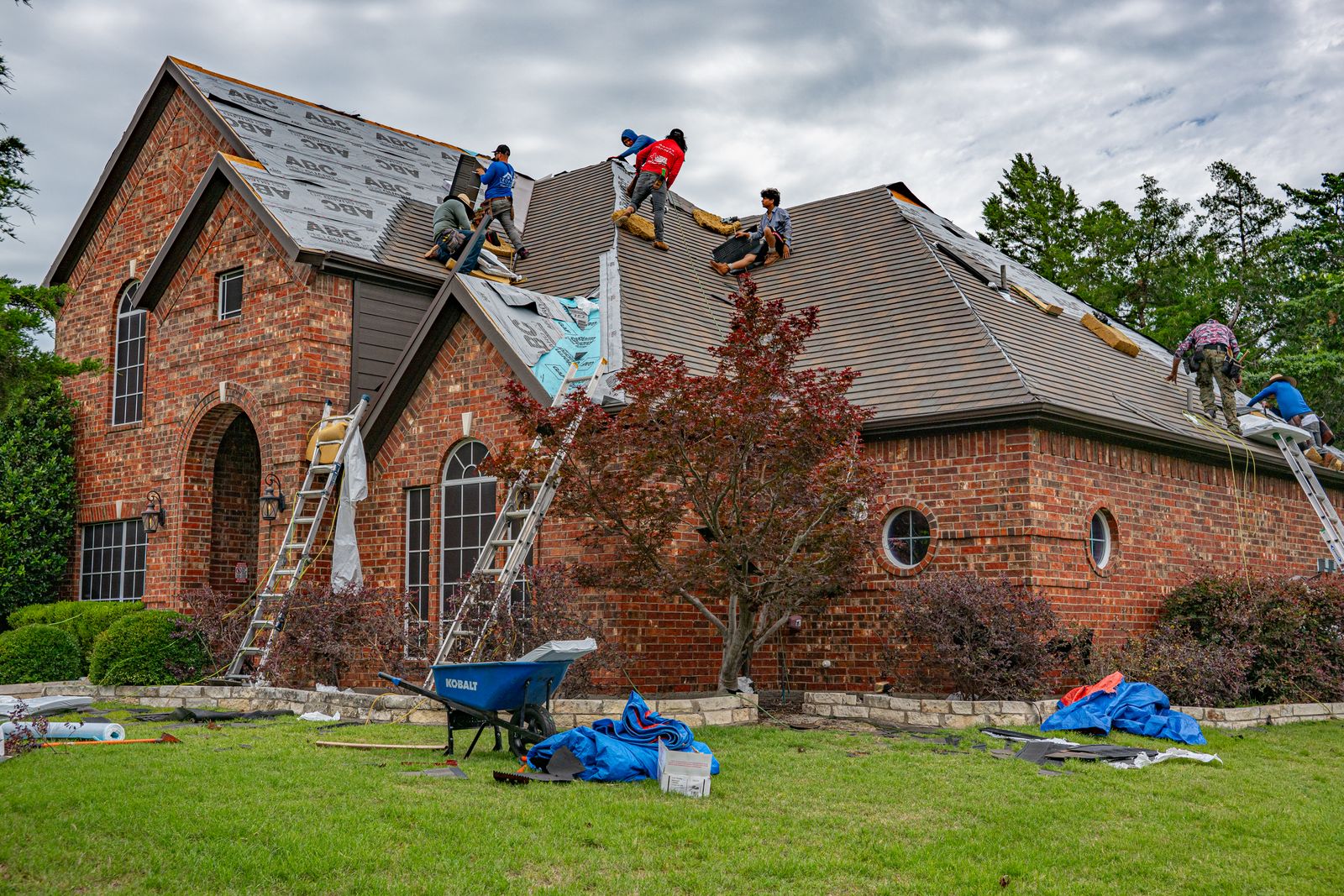
Roofing is one of the few home improvements where the material cost is a huge fraction of the total — often half or more. That is why contractors do genuinely need some money before the work starts: they are floating thousands of dollars of shingles, underlayment, and decking on your behalf. A reasonable deposit is normal and not a red flag on its own.
What is not normal is being asked to pay for the entire job, or even most of it, before the truck arrives.
The payment schedule for a typical residential roof replacement looks roughly like this:
1. Deposit — 10 to 30 percent, at contract signing or when materials are ordered. This covers the contractor’s material outlay. On a $14,000 replacement, that is somewhere between $1,400 and $4,200. A deposit above about a third of the total is worth pushing back on. Some states cap residential contractor deposits by law — California, for example, limits a home improvement deposit to $1,000 or 10 percent of the contract price, whichever is less. If your state has a cap, you should know about it before signing.
2. Progress payment — at “dry-in.” Once the old roof is torn off and the new underlayment and flashing are installed, your house is weatherproof again even if the shingles are not on yet. This is the natural halfway point, and a payment of roughly a third of the total here is common. Some contractors skip this and go deposit-to-final; others break it into two progress payments on larger jobs.
3. Final payment — after inspection and cleanup. The remaining balance is paid only after: the roof is fully installed, you have walked the property with the contractor (or done your own walkthrough) and are satisfied, all debris and stray nails are cleared, and you have your warranty paperwork in hand. This is the moment your leverage is highest. Do not surrender it early.
For repairs — anything from a few missing shingles to a flashing replacement — the schedule is usually simpler: little or no deposit, and the full amount on completion. Repair jobs are small enough that most reputable roofers will just do the work and invoice you.
What is the best way to pay a roofer?
Payment method matters more than most homeowners realize, because it determines what recourse you have if the work is defective or the contractor disappears.
Credit card is the best consumer protection you can get. If the job is not done, or is done badly, you can dispute the charge through your card issuer. That right — a chargeback under the Fair Credit Billing Act on billing errors, or under the card network’s own rules on services not rendered — is genuinely powerful, and contractors know it. Some will offer a small discount (typically 2 to 4 percent) for not paying by card, because that is roughly what the card processing fee costs them. Whether that discount is worth giving up the protection is your call, but for a $14,000 job, a 3 percent card fee is $420 — and the peace of mind is often worth it.
Check is the standard method and works well. You have a paper trail, your bank record proves payment, and if a dispute goes to court, a copy of the cancelled check is admissible evidence. Write checks to the business name, not to an individual. If the contractor asks you to make it out to their personal name rather than the LLC or corporation on the contract, stop and ask why.
Bank transfer (ACH or wire) works, but has less recourse than a card. Once a wire is sent, it is essentially gone — you cannot claw it back the way you can dispute a card charge. Reserve wire transfers for the final payment on a completed job, not for a deposit.
Financing through the contractor is common on larger jobs and is not inherently a problem — but read the loan terms as carefully as you would read a mortgage. Some contractor-arranged financing is genuinely good; some is loaded with fees and rates that push a $14,000 job to $22,000 by the end.
Should you pay a roofer in cash?
Almost never. This is one of the most-asked questions in roofing, and the answer is more definite than most homeowners expect.
Paying in cash means:
- No paper trail. If the contractor claims later that you never paid, or paid less, you have no proof. A signed receipt helps but is not as strong as a bank record.
- No chargeback. Once the cash is handed over, it is gone. You cannot dispute it with a bank or card issuer.
- No warranty leverage. Warranty disputes often hinge on proof that the job was paid for in full and on time. Cash makes that harder to establish.
- A signal about who you are hiring. A licensed, insured, tax-compliant contractor has no meaningful reason to prefer cash. A “cash discount” of a few percent is not really about the contractor saving on card fees — 3 percent on a $14,000 job is $420, which is not enough to explain the preference. The larger reason is usually that cash income can be underreported to the IRS. That is the contractor’s problem legally, but it is your problem practically, because it tells you the person you are hiring is comfortable operating outside the rules — which is exactly the kind of person you do not want on your roof with your money.
There is one narrow exception: very small repair jobs — a $200 patch, a service call — where a licensed contractor takes cash simply because it is fast and both sides trust each other. Even then, get a written receipt on the contractor’s letterhead. For anything four figures or above, cash is the wrong answer.
Red flags around payment
Some payment requests are not just unusual — they are warning signs that the job is likely to go badly, or that you are dealing with someone who will not be around when the warranty matters.
“Full payment up front.” No legitimate roofer needs the entire contract paid before starting work. If someone insists on it, walk away. You have zero leverage from that moment forward, and no honest business model requires it.
“Cash only” or “cash discount only.” Covered above. Skip.
A deposit that is far above 30 percent. Ask what it is for. If materials are already on site, you can inspect that they are actually what the contract specified. If they are not, you are just funding the contractor’s next job, not yours.
Pressure to pay before the walkthrough. The final walkthrough is where you catch problems — missed nails, sloppy flashing around chimneys and skylights, damaged landscaping, gutters full of granules. A contractor who pushes to be paid before you have walked the property is trying to move on before you notice something.
Missing paperwork at the end. You should receive: the manufacturer’s warranty registration for the shingles, the contractor’s own workmanship warranty in writing, a copy of the permit and any inspection sign-off, and a final invoice marked paid. If any of these is missing, hold the last payment until it appears.
A lien waiver they will not sign. This is technical but important. In most states, if a contractor does not pay their material supplier, the supplier can put a lien on your house — even though you already paid the contractor. A signed lien waiver at final payment protects you against this. Any established roofer will sign one without hesitation. Refusal is a serious red flag, and often means they are behind on paying their suppliers.
What if a contractor asks for a payment schedule you are not comfortable with?
Negotiate it. The payment schedule is a contract term, not a fixed law. If a contractor is proposing 50 percent deposit and 50 percent on completion, you can propose 20 percent deposit, 40 percent at dry-in, and 40 percent at completion — and most will agree, because reasonable contractors know that reasonable homeowners do not want to be exposed for tens of thousands of dollars.
If they will not budge, that is data too. A contractor with a strong cash flow and a full pipeline of work does not need to squeeze one homeowner for a big up-front payment. A contractor who insists on one usually needs your money to pay for a previous job that went sideways — which is not a business you want to be part of.
A quick word on insurance jobs
If your roof is being replaced through a homeowners insurance claim, the payment mechanics are different — the insurance company pays some or all of it directly, often in two installments (ACV up front, depreciation released when the work is complete). Some contractors will offer to “waive your deductible” or otherwise absorb your out-of-pocket cost. In most states this is insurance fraud, and it is your name on the claim. A legitimate roofer will not offer this. If yours does, that is your answer about them.
What we do at RidgeRoofer
We are not the roofer — RidgeRoofer connects you with a local contractor in your area. The contractor sets the payment terms directly with you, not through us, and we never touch the payment itself. But we do vet the contractors in our network, and part of that vetting is exactly the things above: licensed, insured, established, and willing to work on a payment schedule that a reasonable homeowner would sign.
If you want a written quote from a local roofer in your area — free, no obligation, and with normal payment terms you can actually read before you sign — get connected with a local contractor.
This post is general guidance for homeowners hiring residential roofing contractors in the United States. Contract terms, deposit caps, and lien laws vary by state — check your own state’s licensing board or consumer protection office for the rules that apply to you. Nothing here is legal advice.

